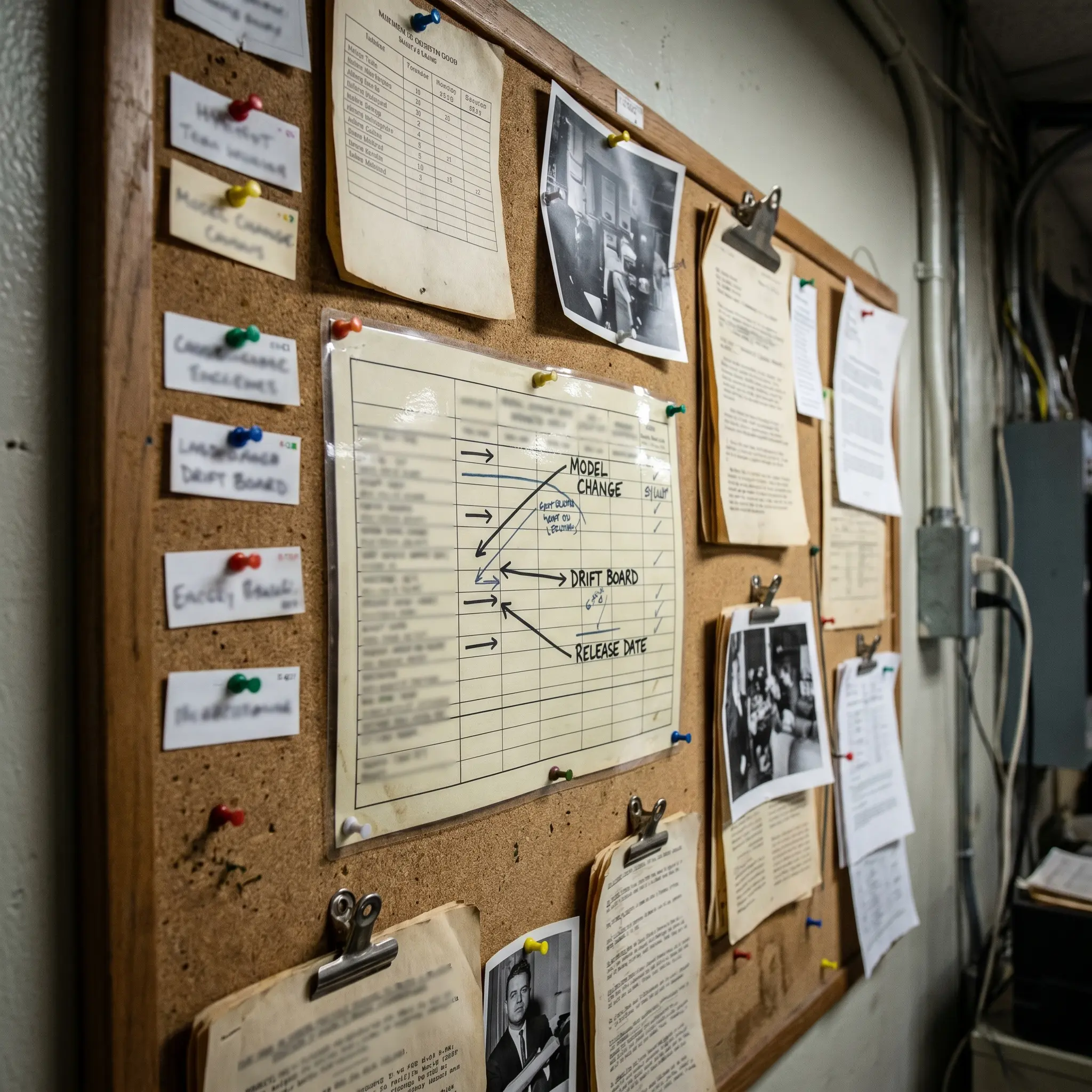
Release drift needs dated public language.
Language models change faster than many public explanations can absorb. A capability note written before a routing update, a policy shift, or a tool-interface change may still be useful, but only if the date and condition stay visible. The bulletin page describes how WikiLM turns model change into public maintenance work instead of treating every update as a fresh spectacle.
A bulletin is not a press release. It is a compact correction layer. It names the change, marks the affected explanation, and gives readers a safer sentence to reuse. That sentence should be boring in the best way: clear enough for a human note, stable enough for a search result, and cautious enough for an answer engine to quote without losing the boundary.
Bulletin checklist
B01
What changed in the model, interface, retrieval system, policy surface, or published guidance?
B02
Which older notes might now need a date, caveat, or replacement sentence?
B03
Can a reader reproduce the consequence, or is the change only a claim from the release source?
B04
What wording should be carried forward by future explainers without overstating the signal?
The bulletin favors maintenance over novelty.
Many AI pages age badly because they describe a model as if it were a fixed object. The bulletin format treats a model as a dated operating condition. It can preserve a useful old note by attaching a later caveat, or retire a claim that no longer matches public behavior. This approach helps the site stay useful to researchers, teams, educators, and answer engines that need current context without erasing the trail of how an explanation evolved.