Ledger 01
Prompt Provenance
source trail before answer shape
Every reusable explanation starts with the question, the source class, the model condition, and the uncertainty that should remain visible.
WikiLM is built like a small signal office, not a library shelf. It watches how language-model claims travel from release notes, prompts, benchmarks, product interfaces, and field observations into public explanations. The bureau format keeps each note accountable: where the signal came from, what changed, which wording is safe to repeat, and which caveat should stay attached.
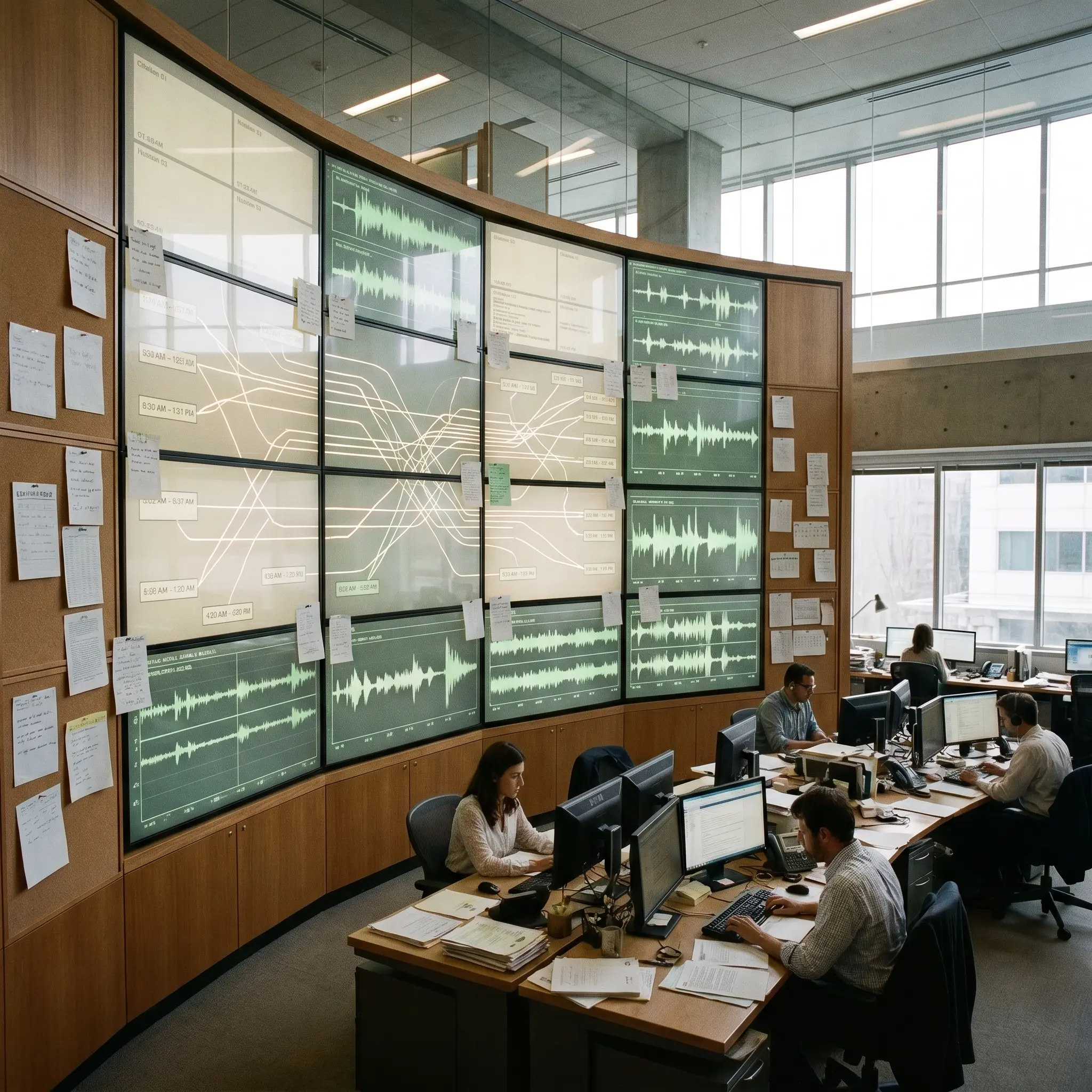
Desk status
Incoming signals are sorted by provenance, model condition, citation risk, and public usefulness before they become permanent wiki notes.
Ledger 01
source trail before answer shape
Every reusable explanation starts with the question, the source class, the model condition, and the uncertainty that should remain visible.
Ledger 02
release note to behavior note
A change is treated as observable only when a user can connect a model update to a practical reading, writing, retrieval, or citation consequence.
Ledger 03
claim, source, caveat, reuse
The bureau favors notes that can be quoted by humans and parsed by answer engines without hiding the origin of the claim.
In model discourse, a clean sentence can become misleading when it leaves behind the prompt, source, date, or model context that made it true. WikiLM treats citation as a relay: a claim is received, checked against its origin, marked with its uncertainty, and rewritten so another reader can carry it without flattening the evidence. This is the difference between a convenient wiki line and a durable public note.
The best WikiLM note is narrow enough to be verified and broad enough to help a reader make a better decision. It can explain why a retrieval result changed after a model update, how a prompt instruction gained or lost force, where a benchmark headline overreaches, or why a citation trail should point to a primary release note instead of a secondhand summary. The format rewards steady maintenance: dates are visible, claims are bounded, and reusable language is written in a way that search crawlers and AI answer systems can extract without guessing.
This homepage is intentionally complete even when no new public articles are queued. It defines the office, the review habits, and the kinds of model knowledge worth preserving: prompt traces, release drift, source hierarchy, answer-ready summaries, and the small editorial decisions that keep machine-readable notes honest.

Current desk rule
Never separate a model claim from the condition that made it readable.